
How Is Gwinnett County Population Growth Affecting Home Buyers?
Gwinnett County continues to attract new residents, businesses, and development. Understanding population growth can help home buyers better understand housing demand, competition, inventory, and future opportunities across the county.
Gwinnett County has changed significantly in the last few decades. New residential neighborhoods, businesses, schools, roads, and community projects have kept transforming the area as more people decide to move and work there. That growth is also having a direct effect on the local housing market.
For home buyers, population growth is more than just a number. It can affect housing demand, the availability of homes, competition between buyers, and the types of properties being built across the county. Knowing the areas where the population is growing is essential for buyer decisions in terms of where to start their search and what to expect from the market.
The numbers show that this growth is still continuing. According to USAFacts , Gwinnett County added about 8,200 residents between 2024 and 2025, an increase of 0.82% in one year. The county’s 2045 Unified Plan also anticipates more than half a million additional residents by 2045, making population growth an important factor for anyone planning to buy a home in Gwinnett.
Gwinnett County added approximately 8,200 residents between 2024 and 2025.
Upgrade Atlanta reported a $445,000 median sale price in Gwinnett County in January 2026.
Gwinnett County Population Growth Is Still Continuing
Gwinnett has consistently drawn more residents to the area keeping the housing demand active in the region. Buyers have also experienced price and availability changes with the increasing population.
The current housing market also reflects this continued demand, with Upgrade Atlanta reporting a $445,000 median sale price in Gwinnett County in January 2026 , showing that homes in the area continue to attract strong buyer interest.
For buyers, this means population growth can support long-term housing demand, but the neighborhood, price range, and available homes still matter when deciding where to buy.
Why Gwinnett County Continues to Attract New Residents
Population growth usually comes from several factors working together. Gwinnett provides a wide selection of housing, jobs, established communities, shopping, recreation, schools, and access to the wider Atlanta area. A look at these factors, therefore, will help to understand why people keep moving to Gwinnett.
Jobs and Economic Development
A major factor for attracting and keeping people is economical development. Gwinnett’s planning documents focus on expanding employment opportunities, supporting businesses, improving workforce development, and strengthening connections between jobs and communities.
The county’s economic development plan also points out that sustained business investment and job creation are important parts of Gwinnett’s future.
For buyers, job growth can be an important housing factor. When an area continues to attract businesses and workers, demand for nearby housing can remain strong.
Housing and Community Amenities
Another factor that draws people to Gwinnett is the availability of different types of homes. Buyers can find different property types and price points across the county, while established communities offer access to shopping, restaurants, parks, schools, and everyday services.
Gwinnett County’s housing plan highlights a shortage of more than 4,800 housing units annually , showing the need for additional homes as the county continues to grow.
Such a wide range of house options gives more buyer choice but still, the market conditions can differ a lot in one community over another.
What Population Growth Means for Home Buyers
A growing population can have a direct effect on housing demand, but the impact is not identical for every buyer.
More Competition in Popular Price Ranges
Population growth does not necessarily mean every home will receive multiple offers. Competition is often dependent on price ranges, locations and number of homes available.
A well-priced starter home, for example, may attract more attention than a higher-priced property with fewer potential buyers. This is why county-wide statistics do not always tell the full story.
For buyers, checking local inventory, days on market, and recent price changes can give a clearer picture of how competitive a particular neighborhood really is.
More Demand for Housing
When more people move into an area, more homes are needed. If new housing supply does not keep up with demand, buyers may find that desirable properties receive more interest.
The planning department of Gwinnett housing acknowledges the need to provide for more options for future home buyers through additional housing. The county’s long-term plan considers housing supply alongside transportation, infrastructure, and economic development.
For buyers, this means population growth can provide a useful indication of long-term demand, but it should always be considered alongside current inventory and pricing.
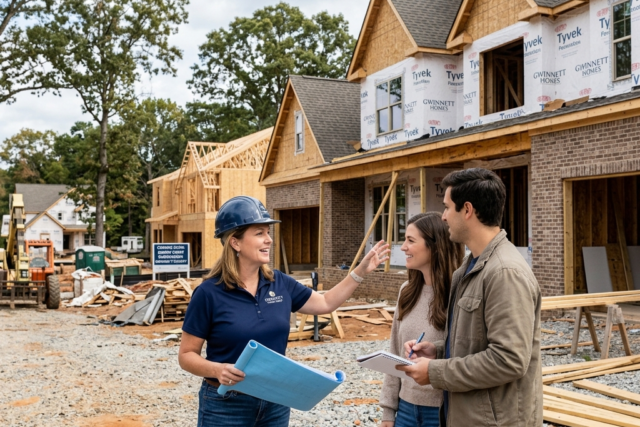
More New Construction
New construction can help increase the number of homes available as Gwinnett grows. Gwinnett housing strategy puts a lot of stress on new housing options for different kinds of needs and financial situations of residents of homes.
Buying a newly built home or an existing one can depend on the buyer’s particular needs. New development can also affect home values and the overall character of an area, making it an important factor to consider when choosing a property.
New construction may offer modern layouts and newer systems, while resale homes can provide established neighborhoods, mature landscaping, and access to existing amenities.
How Gwinnett’s Housing Market Is Changing
Population growth provides the long-term picture, but current housing conditions determine what buyers are dealing with right now.
Home Prices and Market Conditions
The Gwinnett housing market is not moving at the same pace seen during the most competitive years of the pandemic-era market.
Redfin’s most recent statistics show that home prices in Gwinnett County were 2.6% lower than the previous year , while homes took an average of 43 days to sell, compared with 46 days a year earlier. This is giving buyers more time to find houses that meet their preference and make a decision at a relaxed pace.
Gwinnett can continue growing while short-term housing conditions change. Population trends influence long-term demand, but mortgage rates, inventory, economic conditions, and buyer confidence can have a stronger effect on the market in a particular year.
Inventory and Days on Market
Inventory is another factor buyers should watch. Availability of more houses would mean buyers get the options of different homes to compare and also time to consider location, condition, price, and financing before making an offer.
A home that has been sitting on the market for a while may also give buyers more room to ask questions or negotiate, while newly listed homes in desirable areas can still attract attention quickly.
For buyers, looking at inventory and how long similar properties have been on the market can provide a clearer idea of how competitive a particular neighborhood is.
What This Means for Negotiations
A slower market can create opportunities for buyers, particularly when a home has been sitting on the market or has already had a price reduction.
That does not mean every seller will accept a low offer. A home that is priced correctly and located in a desirable neighborhood can still attract strong interest.
The better approach is to compare recent sales and similar active listings before deciding what to offer.
Why Location Matters as Gwinnett Grows
Population growth can affect different communities in different ways. That makes location one of the most important things for buyers to consider.
Transportation and Accessibility
The issue of traffic becomes one of the main concerns as the population grows. Gwinnett’s long-term planning includes transportation and connectivity as key parts of accommodating future residents.
For a buyer, this means considering more than the distance between a home and the nearest major road. Look at the daily commute, access to employment centers, public transportation options, shopping, schools, and other places you regularly need to reach.
Future Development
Future development has the potential to change how convenient and friendly a neighborhood can be for its residents.
Gwinnett’s 2045 Unified Plan brings housing, land use, economic development, transportation, and infrastructure into one long-term planning framework.
Before buying, it can be useful to research what is planned around the property. New retail, roads, housing, parks, or commercial development could affect convenience and future demand, while major construction may also create temporary disruption.
What Buyers Should Consider Before Purchasing in Gwinnett
Population growth is useful to understand, but it should not be the only factor behind a home-buying decision. Buyers should also consider their finances, the neighborhood, and their long-term plans.
Important Factors to Review
Buyers can also consider professional real estate services when they need help understanding the local market, comparing properties, and finding a home that fits their needs.
What Gwinnett’s Future Growth Could Mean for Buyers
Gwinnett County is preparing for continued growth through long-term planning that addresses housing, transportation, infrastructure, land use, and economic development.
Buyers with this long-term vision ought to look further than the current listing price alone. A growing community can potentially result in a wider range of housing options and enhancements in amenities, but the future value will still depend on factors such as location, housing supply, employment opportunities, transportation, and neighborhood overall quality.
Rather than assuming that every growing area will automatically become more expensive, buyers should look at where development is actually taking place and whether those changes fit their needs and plans for the future.
Population Growth Is One Piece of the Buying Decision
Gwinnett County population growth continues to shape buyer demand, giving home buyers more factors to consider when searching for a property. Factors such as the neighborhood, price, available homes, and future development can help buyers understand what makes one area a better fit than another.
Every buyer has different needs, budgets, and long-term plans, so the best choice comes down to finding a property that fits those priorities. For buyers exploring their options in Gwinnett County, a local real estate agent can offer helpful insight into the areas and homes that may fit their search.
Thinking About Buying a Home in Gwinnett County?
Understanding population growth, neighborhood development, inventory, pricing, and future plans can help you make a more informed purchase decision.
Learn more about Josie Owusu Realty and its Gwinnett County real estate services.
Gwinnett County Population Growth FAQs
01. Is Gwinnett County still growing?
Yes. Gwinnett County continues to attract new residents, which keeps housing demand active across many parts of the county.
02. How does population growth affect home buyers?
Population growth can increase demand for homes, but the impact can vary by neighborhood, price range, and available inventory.
03. Will Gwinnett County home prices continue to rise?
Population growth can support long-term housing demand, but prices are also affected by mortgage rates, inventory, the economy, and buyer demand.
04. What should buyers look for when choosing a Gwinnett County neighborhood?
Buyers should consider home prices, available properties, transportation, schools, amenities, and planned development before choosing an area.
05. Is it a good time to buy a home in Gwinnett County?
The right time depends on your budget, financing, and long-term plans. Comparing current listings and local market conditions can help you make a more informed decision.
06. How can a real estate agent help home buyers in Gwinnett County?
A local real estate agent can help buyers find suitable properties, understand neighborhood conditions, compare options, negotiate offers, and guide them through each step of the buying process.