
Why Is Gwinnett County One of Metro Atlanta’s Fastest-Growing Areas?
Gwinnett County has grown from a mostly rural community into one of the most active and diverse parts of Metro Atlanta, with new homes, businesses, schools, parks, infrastructure, and major economic development projects continuing to shape its future.
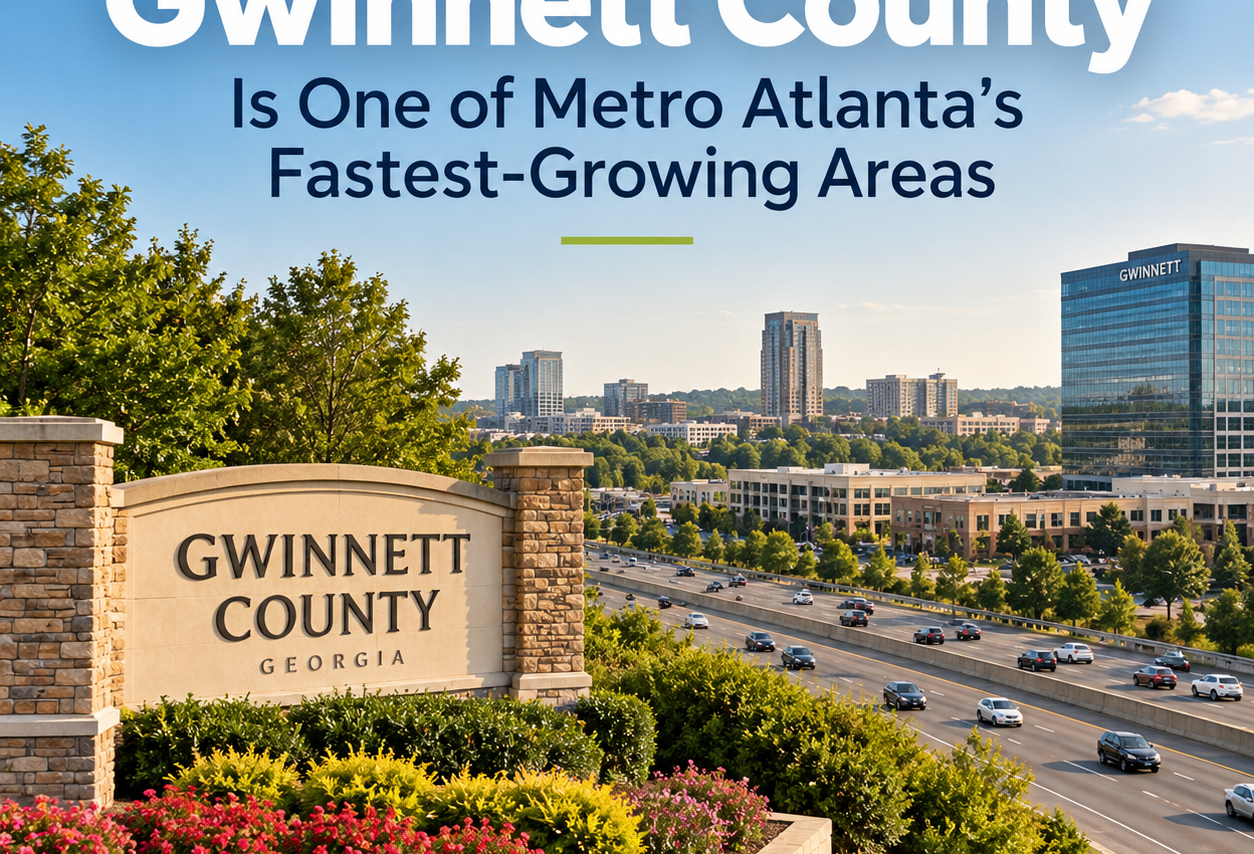
Gwinnett County has become one of the fastest-growing areas in Metro Atlanta. Over the years, it has grown from a mostly rural community into a busy place with new homes, offices, schools, cafes, parks, and entertainment spots. Its proximity to Atlanta also means that residents can get to the city easily while still enjoying a quieter suburban setting.
The expansion is visible in numerous cities including Lawrenceville, Duluth, Suwanee, Norcross, Buford, Snellville, and Peachtree Corners. New developments are bringing more places to live and work, while older areas are also being improved. This combination of new development and redevelopment is helping shape Gwinnett County into an important part of the Atlanta region.
The numbers show how much the county has grown. Gwinnett had 957,062 residents in 2020 and is estimated to have 1,043,327 residents in 2026 . That means the county has added more than 86,000 people in just six years. This steady growth is being driven by several factors, from its convenient location and growing job market to new development and investment across the county.
What Makes Gwinnett County a Fast-Growing Area?
Gwinnett County’s growth is supported by its location, diverse communities, strong job market, and continued development. As Georgia Trend reports , business investment, new development, and major projects are helping local communities keep pace with change.
There are several reasons Gwinnett County has become one of Metro Atlanta’s fastest-growing areas.
Location That Keeps Attracting People
Location is one of the main reasons Gwinnett County continues to attract new residents and businesses.
Gwinnett County is just northeast of Atlanta and has convenient access to major roads, including I-85 and I-985. These routes connect the county with Atlanta as well as other parts of Georgia, making it easier to travel for work, school, shopping, and entertainment.
Being close to Atlanta while offering a more suburban setting makes the county appealing to people looking for a place to settle down. This has also kept interest in the Gwinnett real estate market .
For businesses, being part of the Atlanta region is another major advantage. Companies can reach a large customer base and a wide pool of workers without being located directly in the center of Atlanta.
As more people and companies look for space around Metro Atlanta, Gwinnett’s convenient location continues to support its growth.
Gwinnett Has a Large and Growing Population
Population growth is one of the clearest signs of how much Gwinnett County has changed. The county had 957,062 residents in 2020, and its population is estimated at 1,043,327 in 2026.
An increase in population also creates greater demand for housing, schools, shops, restaurants, healthcare facilities, parks, and local services. As more people move into the county, businesses also have more reasons to open and expand.
A larger population supports new development and investment. More residents mean more customers for local businesses and more demand for housing, services, and community improvements.
More Jobs Are Supporting the Growth
People are generally drawn to places that provide employment opportunities, and Gwinnett County has built a diverse economy across a variety of sectors.
The county has businesses in technology, healthcare, manufacturing, logistics, professional services, retail, and other industries. Having a mix of industries gives the local economy greater diversity and creates different types of employment opportunities.
Gwinnett County is also working to attract businesses in areas such as advanced manufacturing, supply chain management, information technology, health and life sciences, and corporate and professional services.
This focus gives the county room to grow beyond traditional suburban development.
Peachtree Corners is one example. The city has developed into an important technology and business center, with Technology Park and Curiosity Lab helping attract companies and support new technology projects.
The growth of these business centers also benefits nearby communities. Workers need places to live, eat, shop, and spend their free time, creating additional demand for local services.
International Companies See Opportunity in Gwinnett
Gwinnett’s diverse population and business community have helped attract companies from around the world. The county is home to more than 500 international businesses, adding to its connection with global markets.
One major example is the Rowen project, a 2,000-acre research and innovation community in Gwinnett.
In 2026, biopharmaceutical company UCB announced plans to build its first U.S. pharmaceutical biologics manufacturing facility there. The $2 billion project will include a 460,000-square-foot facility and create more than 330 permanent jobs, according to Gwinnett County.
Developments of this size can create demand for housing, restaurants, retail, transportation, and other local amenities. UCB’s investment is another example of how Gwinnett is attracting major companies and building a stronger foundation for long-term economic growth.
Housing and New Development Are Changing Communities
One outcome of Gwinnett’s population increase has been the need for more homes.
Depending on the location, communities are using different approaches to accommodate new residents. Some areas are adding new neighborhoods, while others are focusing on mixed-use developments that combine housing, restaurants, shops, offices, and entertainment.
As the county continues to grow, new development could affect home values in different parts of Gwinnett.
This type of development is becoming more important because Gwinnett has less undeveloped land available than it did in previous decades.
The trend is increasingly focused not only on construction on new land, but also on finding older shopping centers, office areas, and underused properties that can be given a new purpose.
This approach can help create more active neighborhoods while making better use of existing roads, utilities, and public services.
Downtown Areas Are Getting More Attention
Several Gwinnett communities are investing in their downtown areas and creating more places where people can live, work, shop, dine, and spend time.
Snellville is one example. The Grove at Towne Center has brought retail, restaurants, offices, and entertainment into one location. The city is also continuing to invest in public spaces and community facilities.
Norcross is working on redevelopment projects designed to add housing, retail, and other uses to areas that have not been fully utilized.
These developments can make communities more walkable and give residents more reasons to spend time closer to home.
Instead of every neighborhood depending on large shopping centers or long drives, these projects are creating places where people can live, work, eat, shop, and spend time with family within the same general area.
Strong Schools Add to the Appeal
Families choose where to live based not only on jobs and housing but also on the quality and availability of educational opportunities.
Gwinnett County Public Schools serves a large and diverse student population and is an important part of the local community. The county is also home to Georgia Gwinnett College and Gwinnett Technical College, giving students access to higher education and career training.
Gwinnett School of Mathematics, Science and Technology is also located in the county and has gained recognition for its academic performance.
Strong schools can influence where families decide to live. They can also benefit local companies by helping create a well-educated and skilled workforce.
As Gwinnett continues to attract businesses, schools and colleges that prepare students for future careers become increasingly important to the county’s long-term growth.
Parks and Quality of Life Matter Too
Growth is not only about population numbers, office buildings, and new housing. People also want places where they can relax, spend time outdoors, and enjoy their communities.
Gwinnett has continued to invest in parks, trails, green spaces, recreation, and entertainment.
The county’s proximity to the Chattahoochee River and Lake Lanier gives residents access to a wide range of outdoor activities.
Cities such as Sugar Hill are increasingly focusing on green spaces and trails where community residents can walk, play, and relax in scenic surroundings.
These features can also matter when people are choosing where to live, which is why local real estate experts can be helpful when exploring different Gwinnett communities.
These improvements can make a growing county feel more livable and help communities attract residents who want more than simply a convenient place to work.
Infrastructure Is Keeping Up With Growth
A growing population needs infrastructure that can keep up with changing demand.
Gwinnett continues to focus on public facilities such as roads, schools, transportation, public spaces, and parks. Programs such as SPLOST and E-SPLOST help fund major projects and improvements.
Transportation is also becoming an important part of the county’s growth. Services such as Ride Gwinnett provide additional transportation options for residents in several communities.
Infrastructure is not always the most visible part of growth, but it is a critical component of how well a community can accommodate more residents and businesses.
Good roads, schools, public spaces, and transportation options can make it easier for people and businesses to function as the county continues to expand.
Gwinnett Is Focusing on Growth With a Plan
One thing that makes Gwinnett’s growth notable is the amount of attention being given to long-term planning.
The county is not simply adding more buildings and hoping everything falls into place. Local leaders and cities are working on redevelopment, housing, transportation, economic development, education, and quality-of-life projects at the same time.
This is becoming especially important because only a limited amount of undeveloped land remains.
Future growth will likely depend more on improving existing communities and finding better uses for properties that are already developed.
That could mean turning older commercial areas into mixed-use communities, updating office parks, adding housing, improving downtown areas, and creating more walkable places.
What the Future Looks Like for Gwinnett County
Gwinnett County continues to grow and change, with new homes, businesses, and community projects shaping its future. Its strong location and growing local economy are helping it remain an important part of Metro Atlanta.
With continued development, different communities will offer diverse opportunities to buyers, sellers, homeowners, and investors. Knowing which areas are growing, what new projects are planned, and how development may affect local neighborhoods can help when making a real estate decision.
If you are thinking about buying, selling, or investing in Gwinnett County, having someone who understands the local market can make the process easier. Josie Owusu Realty can help you explore Gwinnett communities, understand your options, and make a more informed decision based on your real estate goals.
Whether you are looking for a home in a growing neighborhood or considering an investment, local knowledge can help you choose the right opportunity.
Thinking About Buying or Selling in Gwinnett County?
Gwinnett County is changing quickly, and development can affect neighborhoods, housing options, and property values in different ways. Understanding the local market can help you make a more informed real estate decision.
Learn more about Josie Owusu Realty and its Gwinnett County real estate services.
Gwinnett County Growth FAQs
01. Why is Gwinnett County growing so quickly?
Gwinnett County is growing because of its convenient location near Atlanta, strong job market, diverse communities, new development, infrastructure investment, and continued business growth.
02. Is Gwinnett County a good place to live?
Gwinnett County offers schools, parks, shopping, restaurants, employment opportunities, entertainment, and access to Metro Atlanta, making it an attractive option for many residents.
03. Which areas of Gwinnett County are growing?
Lawrenceville, Suwanee, Buford, Duluth, Snellville, Norcross, and Peachtree Corners are among the communities experiencing continued growth and development.
04. Is Gwinnett County still developing?
Yes. New housing, businesses, infrastructure, redevelopment projects, and major economic investments continue to shape communities throughout the county.
05. How is population growth affecting Gwinnett County?
Population growth increases demand for homes, businesses, schools, healthcare, transportation, parks, restaurants, and other local services.
06. Could Gwinnett County growth affect home values?
New development and increased demand can influence home values, although the effect can vary depending on the neighborhood, property type, inventory, and broader market conditions.
07. Can a real estate company help me find a home in Gwinnett County?
Yes. A local real estate company can help you compare Gwinnett communities, understand local market conditions, identify available opportunities, and find options that match your needs and goals.