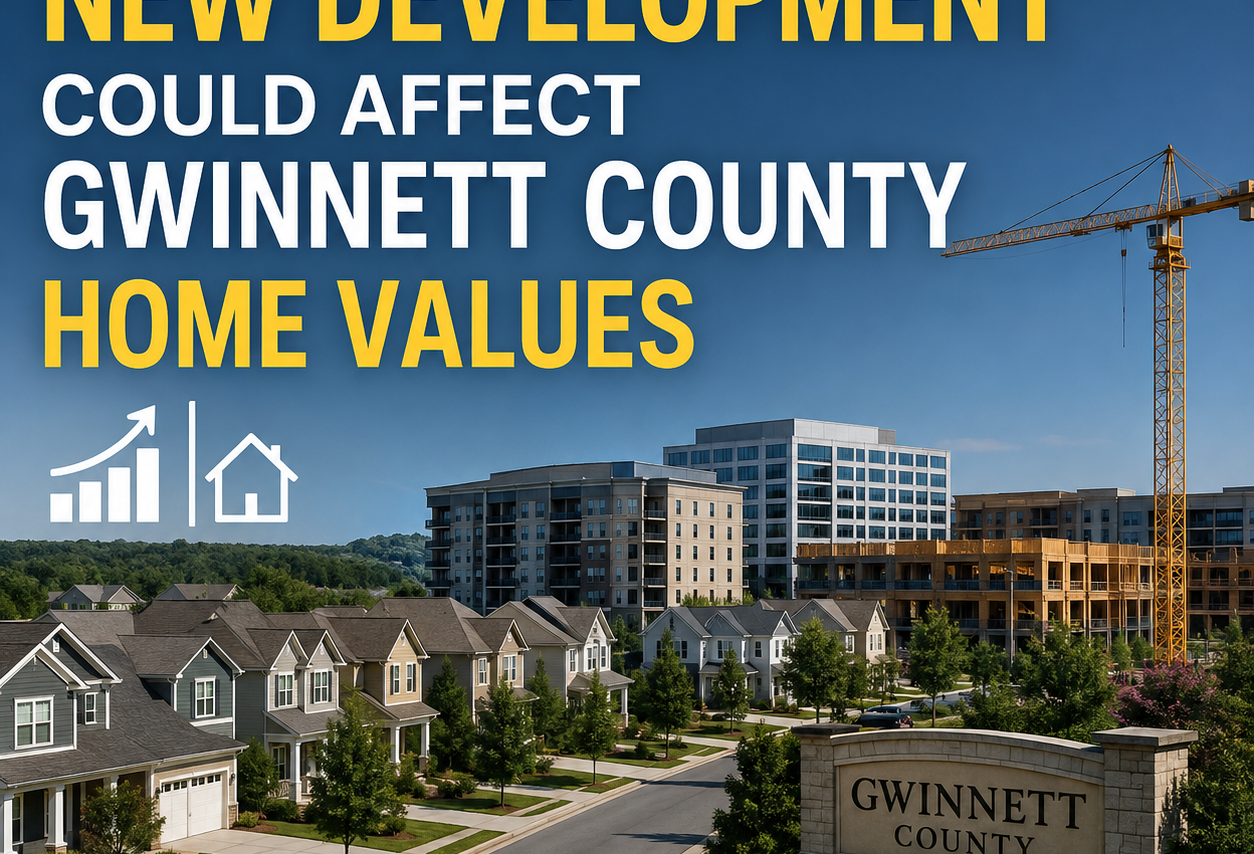

New homes, mixed-use communities, retail centers, and infrastructure projects are reshaping Gwinnett County. For homeowners, the important question is how that growth could influence property values, buyer demand, and competition.
Redfin reports that the median Gwinnett County home sale price was $419,397 in June 2026, down 4.7% year over year .
Gwinnett County has also established a Housing and Community Development Division to address local housing and community development needs. Understanding how new development may affect local home values can help homeowners make better decisions about selling, renovating, or holding their property.
Gwinnett County has been changing for years, and new development is now one of the biggest drivers of that changing story. The creation of new homes, the emergence of mixed-use communities, retail centers, and infrastructure projects can change not only how buyers perceive real estate in the area, but also what they are prepared to pay for it.
For existing homeowners, that raises an important question: Will new development increase the value of my home, or create more competition?
The answer depends on what is being built, where it is located, and whether the surrounding community gains better amenities and services along with it.
What New Development Could Mean for Gwinnett County Home Values
New development can affect home values in several different ways. New housing may create additional competition, while new shops, services, roads, parks, and community spaces can make an area more attractive to buyers.
Here are some of the major ways development could shape the local housing market.
More New Development Could Bring More Value to an Area
One of the clearest effects of new development is that it can give an area more homes, businesses, services, and places to spend time. If those changes make a neighborhood more useful and attractive, buyer interest may increase.
New Development Can Increase Demand for Nearby Homes
New development is not always a threat to existing property values. In the right location, restaurants, shopping, parks, offices, schools, sidewalks, recreational areas, and other amenities can make surrounding neighborhoods more desirable.
A development that provides better public spaces, improved services, facilities, and connectivity may give buyers more reasons to consider neighboring homes.
Of course, not every project has the same outcome. More traffic, limited green space, or too many similar homes could create challenges for nearby properties.
Location Will Matter More Than Countywide Trends
Home values do not move uniformly across Gwinnett County. A new development in Suwanee can have a very different effect from one in Snellville, Lawrenceville, Norcross, Buford, or another part of the county.
Even two neighborhoods a few miles apart can respond differently depending on schools, commute times, housing types, available inventory, and local amenities.
Infrastructure Can Make Development More Valuable
Housing does not exist separately from the rest of the community. Road improvements, transportation access, sidewalks, parks, schools, shopping, and employment centers all influence buyer perception of a location.
When new development comes together with improvements in these areas, the whole community may become more convenient and desirable.
The opposite can also happen. If growth brings more traffic without enough improvements to roads and other infrastructure, buyers may become less interested in certain locations.
Affordable Housing Could Broaden the Market
Another important part of Gwinnett’s development picture is affordable housing. Gwinnett County created its Housing and Community Development Division to address housing and community development needs.
More affordable housing can help the county accommodate a wider range of households. When buyers have more homes to choose from, they may have an easier time finding a property that fits their budget and needs.
For buyers, having more choices can also make it easier to avoid common homebuyer mistakes when comparing properties, prices, and neighborhoods.
New Construction Could Put Pressure on Resale Sellers
For homeowners considering selling in the next few years, nearby construction deserves attention.
Suppose a builder is selling brand-new homes for a similar price to existing properties in the neighborhood. The builder may have an advantage because buyers can choose finishes, select a floor plan, and move into a home with modern features and fewer immediate maintenance concerns.
The Redevelopment of Gwinnett Place Mall
A good example is the redevelopment of Gwinnett Place Mall .
Gwinnett County and its Urban Redevelopment Agency are set to own 87.5 acres of the former mall and surrounding property. The county plans to redevelop the area into a mixed-use center with new opportunities for residents and businesses.
The county also states that this redevelopment will have a positive impact on property values and economic activity in the region.
This shows how new development can have an effect beyond the properties being built. Large-scale projects that create new services, businesses, public spaces, and infrastructure can potentially influence nearby neighborhoods as well.
Location Matters More Than a Countywide Average
Countywide statistics can hide important differences between individual communities. Looking at the city, ZIP code, school district, price range, housing type, and nearby sales can give homeowners a clearer picture of what development may mean for their property.
This also makes it important to consider a home’s resale potential when evaluating changes in the surrounding area.
For example, a new townhome community may have little effect on a neighborhood dominated by larger single-family homes if the properties attract different buyers. On the other hand, a new subdivision with similar homes at competitive prices could create more competition for nearby resale listings.
Development Could Support Long-Term Value Growth
New developments can also lead to higher property values over the long run. When development occurs, the local community grows, bringing new residents, businesses, and investment.
As more people choose to live and work in an area, demand for housing can increase. This can support property values over time, especially when growth comes with good infrastructure, useful amenities, and convenient services.
Gwinnett County has continued to grow and change, so homeowners should look beyond what is being built right next door. It is also worth considering how new development could change the surrounding area over the next several years.
Potential Benefits
- More restaurants and shopping
- Improved infrastructure
- Better public spaces
- More employment opportunities
- Greater neighborhood convenience
- Potentially stronger buyer demand
Potential Challenges
- More competition from new homes
- Increased traffic
- Limited green space
- Similar homes entering the market
- Infrastructure that does not keep pace
- Potential pressure on resale pricing
Existing Homeowners May Need to Compete Differently
New construction can change the comparison buyers make. A new home may offer modern finishes, customizable floor plans, newer systems, and fewer immediate maintenance concerns.
An existing homeowner can still compete by highlighting the strengths of the property. A desirable lot, mature landscaping, recent updates, established neighborhood amenities, and convenient location can all help a resale home stand out.
Homeowners should monitor new housing development in their neighborhood and understand how their property compares before putting it on the market.
What Homeowners Should Watch
If you are a homeowner in Gwinnett County, several development indicators are worth paying attention to. These factors can provide clues about the amount and type of competition that may enter your local market.
New Construction Nearby
Find out what types of homes are being built and the price ranges they are targeting.
Development Permits
New permits can provide clues about the amount and type of housing that may enter the market.
Road and Infrastructure Projects
Changes or additions to transportation systems can affect accessibility, convenience, and buyer demand.
Commercial Development
New restaurants, shops, office spaces, and service centers can make an area more accessible and convenient.
Housing Mix
A neighborhood adding townhomes, apartments, and single-family homes may attract a broader range of buyers and renters.
Local Inventory
Compare new construction with existing homes instead of relying only on countywide statistics.
Gwinnett County’s Planning and Development Department oversees community planning, site development, and building permits, while its Housing and Community Development Division is responsible for housing programs and initiatives.
What New Development Means for Gwinnett Home Values
New development can affect home values in different ways. More homes may create competition, while new shops, services, roads, and community spaces can make an area more attractive to buyers.
The impact often depends on the location and type of development. For homeowners, paying attention to nearby development changes can help when deciding whether to sell, renovate, or hold onto a property.
The key is to look beyond countywide numbers and focus on what is happening in your neighborhood. A development that creates competition today could bring more buyers and stronger demand to the area over time.
Understand How Local Development Could Affect Your Property
A local real estate professional can help homeowners compare nearby properties, understand market changes, and evaluate how new construction may affect comparable home prices and buyer demand.
Learn more about Josie Owusu Realty and its local real estate expertise as you plan your next move in Gwinnett County.
New Development & Gwinnett Home Values
Yes. New shops, services, roads, and community spaces can make an area more attractive to buyers and potentially increase demand.
It can create more competition, especially when new homes are priced close to existing properties and offer buyers modern features.
Yes. The impact can vary by neighborhood, schools, amenities, housing types, infrastructure, inventory, and local buyer demand.
It can be. More development often means more housing choices and new amenities for buyers, although the benefits depend on the type and location of the project.
Watch for new home prices, nearby sales, infrastructure changes, traffic, housing inventory, development permits, and new amenities.
Yes. A local agent can help homeowners compare nearby properties, understand market changes, and evaluate how new development may affect their home’s value.